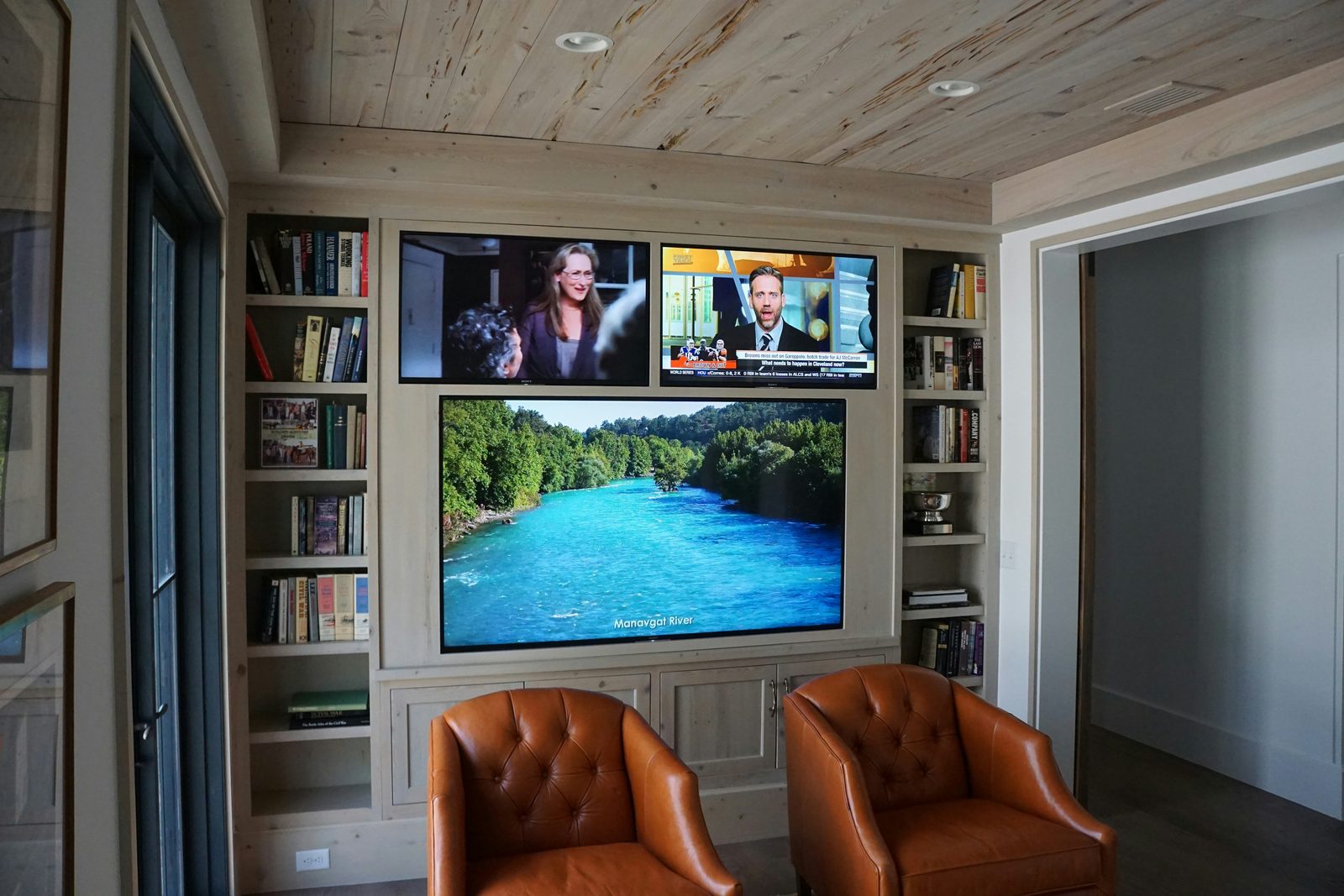
Bespoke alcove units, chimney-breast cabinets and built-in shelving for Barnet and Hertfordshire living rooms, studies and bedrooms. Painted hardwood facings, scribed to the wall, finished to match your room.
What Counts as Alcove Joinery
Almost every home built in Barnet and the surrounding areas between 1900 and 1970 has a chimney breast in the living room — and two recessed alcoves either side. The alcoves are the single most under-used feature in British domestic architecture. Done badly they become magnets for bookshelves and clutter; done well they transform the room.
Common Alcove Configurations
Cabinet base + open shelving above. A pair of two-door cabinets at the base (television, kit, storage) with painted oak or MDF shelves above. Floor-to-ceiling, matched either side. The most common configuration we see and arguably the most flexible.
Full-height cabinets. Cupboards from floor to ceiling on both sides, no open shelving. Useful if storage is the priority over display.
Floating shelves only. No base cabinets — five or six floating shelves either side, scribed to the alcove, painted to match the wall. The cheapest option (£300–£600 per side) and surprisingly effective.
Asymmetric. Sometimes one alcove gets a cabinet base (next to the sofa), the other gets just shelving (next to the radiator). Rooms aren't always symmetric — a good carpenter works with that.
Materials and Finish
Carcasses are typically veneered MDF or birch ply. Facings (doors, drawer fronts, fascia trim) are paint-grade MDF or solid tulipwood. Shelves can be MDF, oak veneer, or solid hardwood depending on weight load and finish preference.
Most clients in Barnet want a painted finish matched to the room — sometimes the same wall colour, sometimes a contrasting darker tone. The carpenter will typically prime in the workshop, install, then brush-finish on site so caulk lines and putty are sealed in.
Barnet living-room alcoves
Edwardian terraces around High Barnet and Whetstone have the deepest alcoves (often 35–45cm deep) — ideal for full base cabinets. 1930s semis in Borehamwood, Mill Hill and East Barnet tend to have shallower alcoves (25–32cm) which work better with floating shelves and slimline cabinets. A good local carpenter knows which is which before they measure.
Cost Range
Alcove unit costs in Barnet typically range from:
- Floating shelves only (per alcove): £300–£600
- Cabinet base + open shelving: £900–£1,400 per alcove
- Full-height cabinets, painted: £1,300–£1,900 per alcove
- Pair of matched units, factory-sprayed finish: £2,500–£3,800
Frequently Asked Questions
Do you remove the existing chimney breast surround?
Usually no — alcove units are built into the recess and the existing chimney breast stays. If you're removing the breast as part of a wider remodel, that's structural work and we'll factor that into the quote separately.
Can you paint the units the same colour as the wall?
Yes — that's the most common Barnet living-room finish. Site-painted in your existing wall colour blends the units into the room and they read as built-in joinery rather than furniture.
How long does an alcove install take?
A pair of matched units typically takes 2–4 days on site, plus a measure-up and a workshop day. Floating shelves can be cut and fitted in a single day.
Will TV cables run through the unit?
Yes — a good carpenter will plan for cable runs (TV power, HDMI, network) through the back of the cabinet, with a removable rear panel for future access.