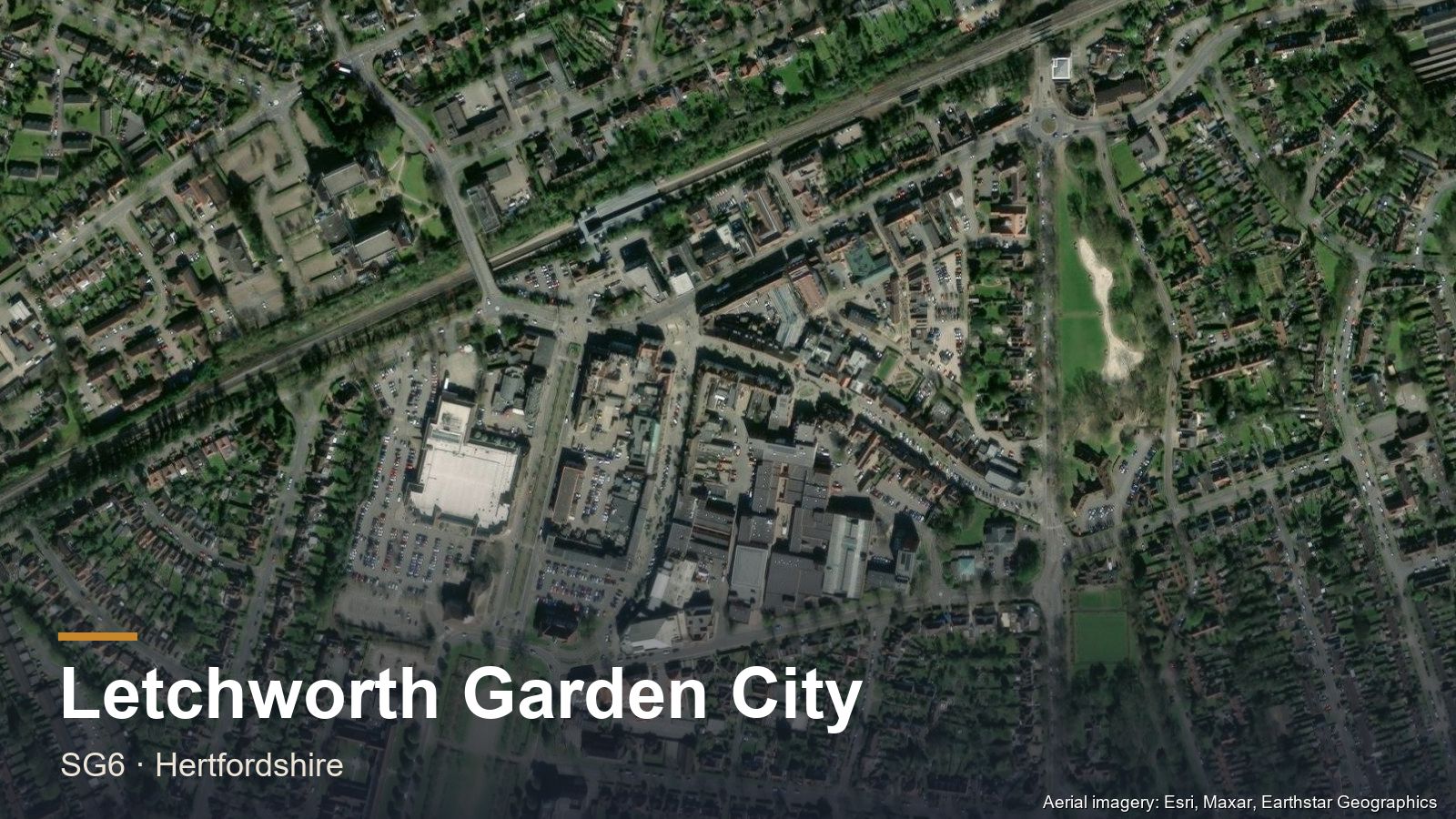
Letchworth Garden City SG6 is the world’s first Garden City, planned from 1903 — and it has a planning layer no other town Herts Build covers has. Most of the town falls under a Scheme of Management established under Section 19 of the Leasehold Reform Act 1967, meaning property owners need consent from the Letchworth Garden City Heritage Foundation for alterations, in addition to standard council planning permission where that applies.
Letchworth housing stock. The town is split into two design categories: a Heritage Character Area, where the original early-1900s garden-city houses sit with strict continuity requirements on materials, proportions, roofline and chimney detailing, and a Modern Character Area covering later-20th-century development, where design rules are more flexible.
Extensions and lofts in Letchworth. Any visible extension or loft conversion in the Heritage Character Area needs to match the existing brickwork, timber and slate detailing and keep the original roofline’s proportions — the Foundation’s design guidance is specific about this. In the Modern Character Area, projects proceed closer to standard Hertfordshire practice.
Two Consents, Not One
This is the practical consequence of the Scheme of Management, and it is the thing that catches people out. In most of Letchworth a visible external alteration needs two separate approvals: planning permission from North Herts where the work requires it, and consent from the Heritage Foundation regardless of whether it does.
The second one applies even to work that would be permitted development anywhere else. Foundation consent is not a formality bolted onto planning — it is a distinct process with its own design guidance, and a scheme can satisfy one and fail the other.
Handle them in parallel rather than in sequence. Running the Foundation application after a planning decision is the most common way a Letchworth project loses two months for no reason. A specialist who has worked the town before will start both at the design stage.
What Projects Cost in Letchworth
The construction itself sits in the middle of our range. What moves a Letchworth budget is the design stage, because Heritage Character Area work has to match existing brickwork, timber and slate detailing rather than use standard modern equivalents.
- Rear dormer — £30,000–£50,000. The Arts and Crafts roofs generally have workable volume.
- Velux / rooflight conversion — £18,000–£30,000, and often the more sympathetic option on a prominent roof slope.
- Single-storey rear extension — £45,000–£75,000, with the deep garden-city plots giving more freedom than the plot ratios suggest.
- Matching materials — budget an allowance in the Heritage Character Area. Reclaimed or specially matched brick and slate cost more than standard stock, and the difference is in the materials rather than the labour.
See the full cost guide for what each figure includes.
North Herts Council & Heritage Foundation Consent
Letchworth Garden City is administered by North Hertfordshire District Council for standard planning matters — but the Letchworth Garden City Heritage Foundation (successor to the original Letchworth Garden City Corporation, established 1995) manages a separate Scheme of Management under Section 19 of the Leasehold Reform Act 1967 across most of the town. In practice this means most homeowners need to apply to the Heritage Foundation for consent to alter their property, on top of any planning permission required from the council — a dual-consent process specific to Letchworth that the specialist factors into the project timeline from the outset.
For the council side, a householder application carries the usual eight-week statutory determination period. The Foundation runs to its own timescale, which is why the two are best started together. Neither replaces building regulations, which are a separate approval again and needed for almost all structural work whether or not either consent is.
Frequently Asked Questions
Do I need Heritage Foundation consent as well as planning permission in Letchworth?
In most cases, yes. Most of Letchworth Garden City falls under a Scheme of Management established under Section 19 of the Leasehold Reform Act 1967, administered by the Letchworth Garden City Heritage Foundation — this requires separate consent for alterations on top of any planning permission needed from North Hertfordshire District Council.
What's the difference between the Heritage Character Area and the Modern Character Area?
The Heritage Character Area covers the original early-1900s garden-city houses, with strict design continuity requirements on materials, proportions and roofline. The Modern Character Area covers later-20th-century development, where the Foundation's design rules are more flexible.
Which council handles standard planning in Letchworth?
North Hertfordshire District Council handles standard planning permission, but the Letchworth Garden City Heritage Foundation's Scheme of Management consent operates alongside it for most properties — both need factoring into a project timeline.
What materials does the Heritage Foundation expect on an extension?
The Foundation's design guidance asks for extensions and alterations to use materials that complement the existing brickwork, timber and slate detailing, and to maintain the proportions of the original roofline and chimneys.
How long does the Letchworth approval process take?
A householder planning application to North Herts has an eight-week statutory determination period, and the Foundation runs its own timescale alongside. Start both at the design stage rather than in sequence; running the Foundation application after a planning decision is the usual reason a Letchworth project slips by a couple of months.
Does the Scheme of Management apply to the whole of Letchworth?
Most of it, but the design requirements differ. The Heritage Character Area covers the original early-1900s garden-city housing and carries strict continuity requirements on materials, proportions, roofline and chimney detailing. The Modern Character Area covers later development and is considerably more flexible.
Before You Commit
Three separate approvals govern most building work and they are routinely confused. Our guide to planning permission in Hertfordshire covers which council decides and what falls under permitted development. Building regulations are a different approval entirely — needed for almost all structural work even when no planning permission is required — and if the job touches a shared wall or involves excavation near a boundary, you will also need a party wall agreement.